An SEO proposal is the document you send a prospect to explain what SEO work you will do, what it will cost and how you will prove it is working. This guide gives you a free, editable SEO proposal template, a filled-in example and the reasoning behind each section.
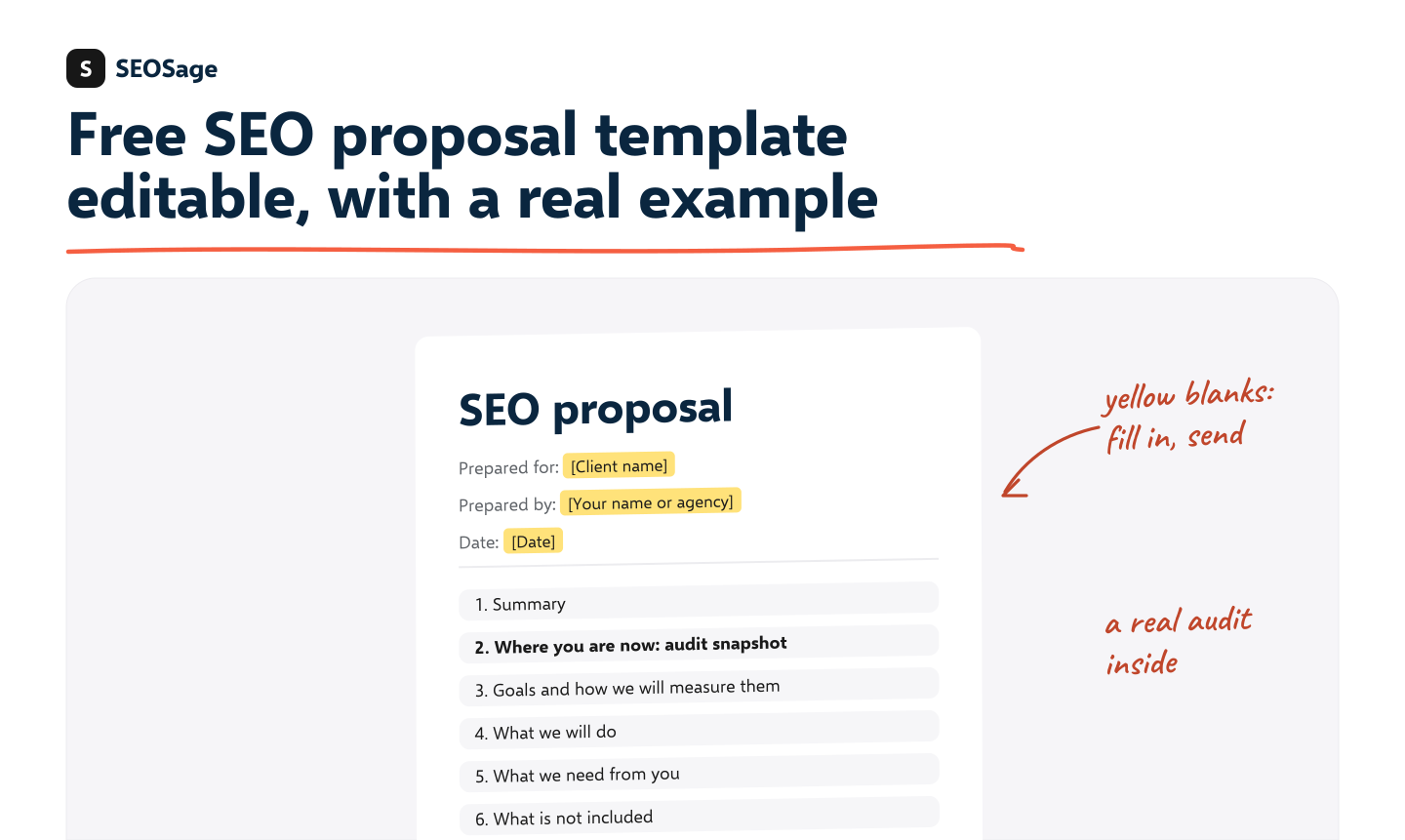
Download the Word template · Download the PowerPoint template · See the filled-in example as PDF or PowerPoint
The Word file opens in Word, Google Docs and Pages, and the PowerPoint file opens in PowerPoint, Google Slides and Keynote. There is no sign-up and no email form. Both have the 11 proposal sections as ready-made pages, with yellow blanks to fill in. The Word file also has a cover email with two follow-ups and a table that turns technical findings into plain words. It is written by the maker of SEOSage, an SEO audit app, so the template has an audit section built in, and we say plainly where the app helps and where it does not.
TL;DR
- A good SEO proposal has 11 parts: summary, audit snapshot, goals, work plan, what you need, what is not included, timeline, reporting, price, about you and next steps.
- Put a real audit in it. A few findings from the prospect’s own site beat any amount of general advice.
- Promise the work and the reporting, never a ranking.
- Keep it to six to eight pages, or 11 slides, and send it as a PDF.
- Translate every finding into plain words with a number, and run the audit in about 30 minutes before the call.
- With SEOSage you can crawl the prospect’s site before the call and export the audit as a branded PDF to attach.
What is an SEO proposal? #
An SEO proposal is a document that offers to improve a business’s visibility in search engines. It states the goals, the work, the timeline, the reporting and the price. Prospects use it to decide whether to hire you, so it has to answer one question: why should we pay you, and what will we get?
It is not the same as an audit or a contract. The audit shows what is wrong with the site. The proposal says what you will do about it and for how much. The contract, which can be a short page at the end, makes the deal binding. If you need to hand over the audit itself, see our guide to the SEO client report.
What should an SEO proposal include? #
A strong SEO proposal includes eleven parts. Most of them fit on half a page.
| # | Section | What it does |
|---|---|---|
| 1 | Summary | The goal, the offer and the price in three sentences |
| 2 | Audit snapshot | Proof you looked at their site, with a score and three findings |
| 3 | Goals and measures | What success means, agreed before you start |
| 4 | What you will do | The work in phases, with what the client receives |
| 5 | What you need | Access, a decision maker and developer time |
| 6 | What is not included | The edges of the job, and the honest line on rankings |
| 7 | Timeline | When things happen, and when to expect change |
| 8 | Reporting | What the client sees each month |
| 9 | Investment | Price, billing and the minimum term |
| 10 | About you | Who you are and one result with a number |
| 11 | Next steps | How to say yes, with a place to sign |
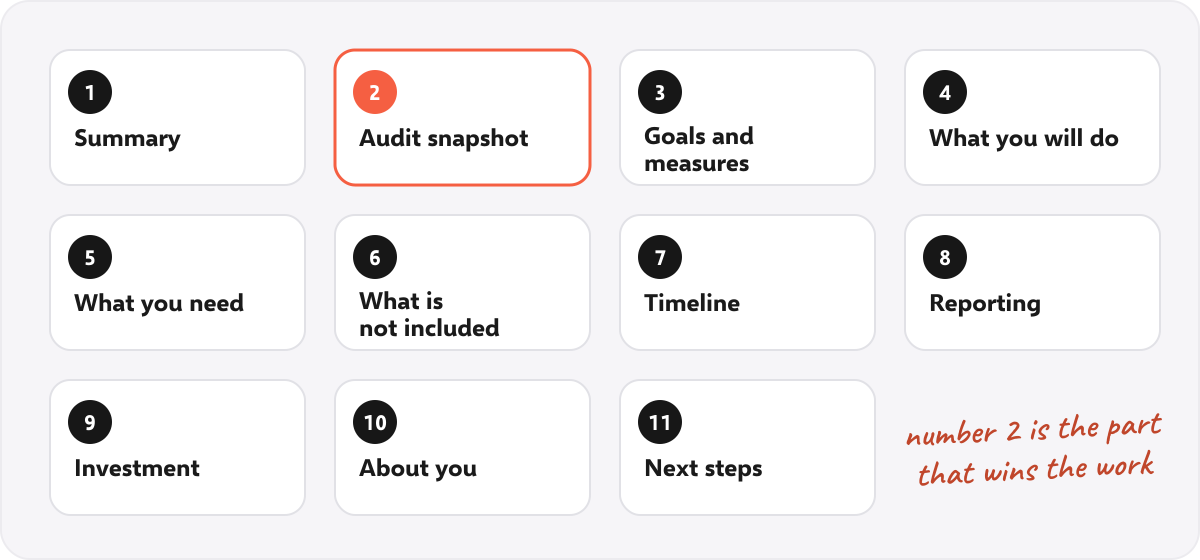
Free SEO proposal template, section by section #
The Word template has every section below, with yellow blanks to fill in. Here is what to write in each one.
1. Summary #
Write this last, put it first. Three sentences: what the client wants, what you found, what you propose and what it costs. A busy owner may read nothing else, so a sentence such as “Marketingly wants more enquiries from Google. Today, 14 pages are hidden from Google by mistake. We propose three months of fixes and page improvements for $1,200 a month” tells them most of what they need.
2. Audit snapshot #
This is the part that wins the work. Crawl the prospect’s site before you write anything, then show a health score, the number of pages checked and the top three findings in plain words. Each finding says what is wrong and why it matters to the business, not the technical name. Attach the full audit as a separate file.
3. Goals and how you will measure them #
Agree two or three goals, how each is measured, where it stands today and where it should be at month six. Use numbers the client can check themselves, such as clicks from Google in Google Search Console. Take the baseline in week one and write that in. Targets are a plan, not a promise.
4. What you will do #
Split the work into phases so the client sees progress early: fix the basics in month one, improve the pages that matter in months two and three, then grow and report. For each phase, say what the client receives, such as a fixed-issues list and a new crawl that proves the fixes.
5. What you need from the client #
List the access you need (Search Console, analytics, the website), one person who can approve changes within a set number of days, and developer time if a fix needs it. Most SEO projects stall because the client is slow to say yes, so write that down.
6. What is not included #
Say what you will not do, such as paid ads, buying links or writing more than a set number of articles. Add the honest line that no one can promise a ranking, because search engines make that decision. Clients trust you more for saying it. Google’s own SEO starter guide is a good plain-language reference for what SEO involves.
7. Timeline #
Give a start date and a simple plan by month. Say when the first visible changes should appear, and be careful not to overstate it. SEO often takes weeks or months to move traffic, which is why the monthly report matters.
8. Reporting #
Say what the client gets each month and how: a short report with the score, what was fixed, what changed and what comes next, plus a call. A branded report that looks the same each month is the clearest proof of work. See why agencies need white label SEO reporting.
9. Investment #
Show the price in a small table: a one-off audit and setup fee, a monthly retainer and any optional extras. Add the billing terms, the minimum term and the notice period. State the currency and whether tax is included.
10. About you #
Two or three lines on who you are, and one result with a real number and a date. Skip adjectives. If you have no client results yet, show an audit you did on a sample site.
11. Next steps #
End with three steps: reply to accept, sign, and book the kickoff within a set number of days. Add a signature line for both sides. One clear next step is easier to say yes to than a menu.
Example: the audit section of a real proposal #
The filled-in PDF uses a real SEOSage crawl of marketingly.org from 29 September 2026. The site scored 53 out of 100 across 90 pages. These were the findings, rewritten as a client would want to read them:
| What the crawl found | Pages | How the proposal says it |
|---|---|---|
| Noindex tag present | 14 | “14 pages are marked to stay out of Google. If any should bring visits, they cannot.” |
| Multiple title tags | 28 | “28 pages have two titles, so Google may show the wrong one.” |
| Missing meta description | 19 | “19 pages have no description, so Google writes its own.” |
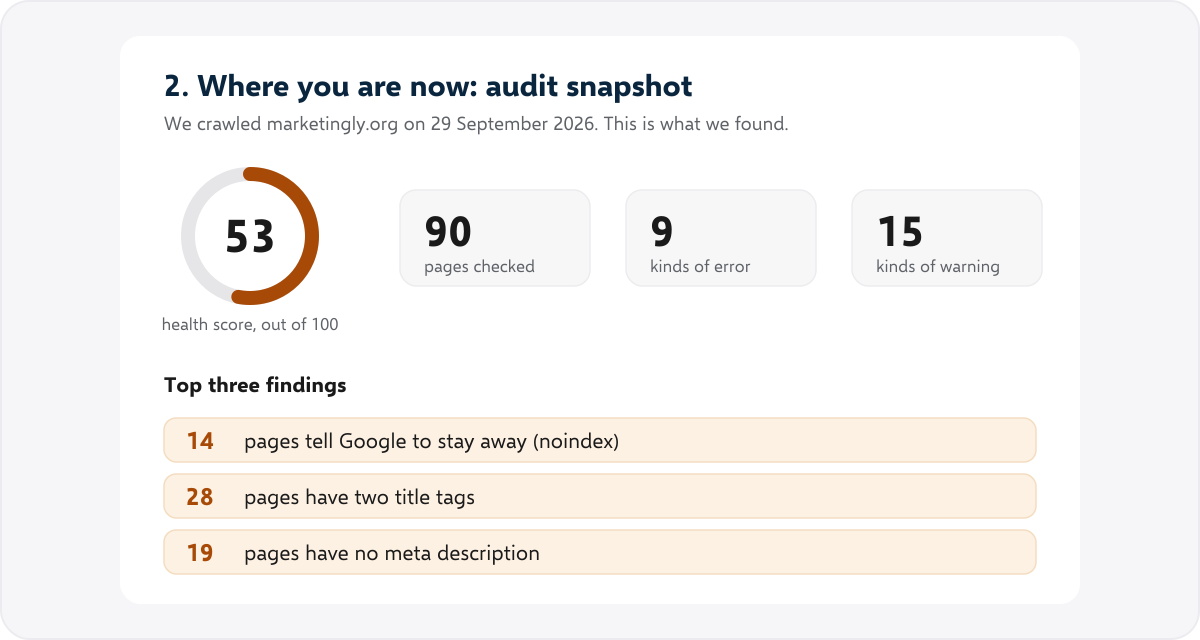
Notice what the proposal leaves out: 25 other kinds of issue the crawl found. A prospect does not need the full list in a proposal, only enough to see that you know where the problems are. Keep the rest for the full audit. In our guide to the SEO client report, a later crawl of the same site scored 99.
The names, prices and targets in the example are only examples. Set your own.
How do you explain technical findings in plain words? #
Translate every finding into what the client would notice or lose. The client does not care that a page has a “soft 404”. They care that people reach a dead end. Keep this table next to you when you write the audit snapshot. It is also in the Word template.
| What the audit says | What the client hears | Why it costs them |
|---|---|---|
| Noindex tag present | “This page is marked to stay out of Google.” | It cannot bring visits, however good it is. |
| Soft 404 | “The page says it does not exist, but the site treats it as live.” | Visitors hit a dead end and Google wastes time on it. |
| Redirect chain | “Visitors take two detours to arrive.” | Slower pages and lost link value. |
| Orphan page | “No other page links to it.” | Visitors and Google can hardly find it. |
| Multiple title tags | “The page has two titles, so Google may pick the wrong one.” | The wrong words show in search results. |
| Missing meta description | “Google writes its own summary of the page.” | A weaker pitch in the search results. |
| Thin content | “There is too little text to answer a search.” | Little reason for Google to show the page. |
| Canonical URL different | “Two addresses lead to one page, and we need to say which one counts.” | Split credit between copies of the same page. |
| Slow response time | “The server takes too long to answer.” | Visitors leave before the page loads. |
| No structured data | “Google cannot show extras such as prices or ratings.” | Plainer results than competitors with extras. |
Then add a number and, if you can, a consequence in the client’s own terms: “14 pages on your service list are hidden from Google” is stronger than “14 noindex issues”.
Example: an audit snapshot for an online store #
The same method works on a different kind of site. We crawled an online store, marketplace.uvation.com, with SEOSage on 14 October 2026. It had 353 pages and scored 74 out of 100. The finding that stood out was 214 pages that say “not found” but answer as if they exist, left behind by products that were removed, with 214 broken addresses still in the sitemap. In a proposal, that becomes:
“214 product pages no longer exist, but they still answer as normal pages and are still listed in your sitemap. Visitors who land on them find nothing, and Google keeps coming back to check. In month one we redirect each to a live product or category and clean the sitemap.”
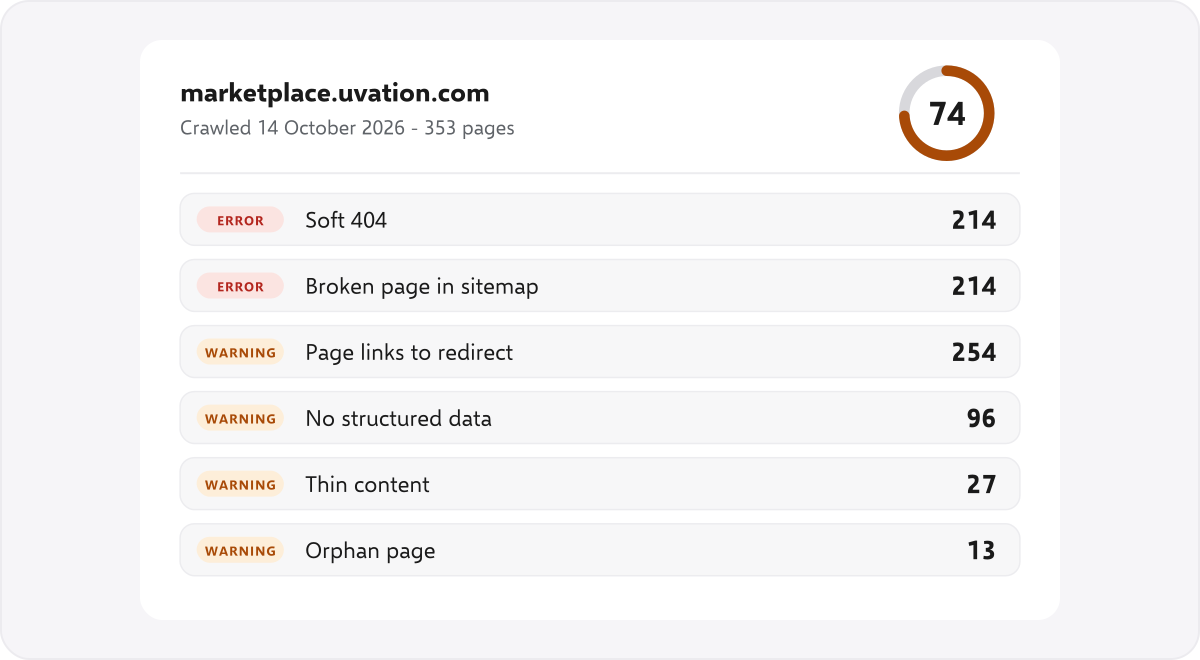
Notice that it names the problem, the number and the fix in three sentences. If your prospect sells products, our ecommerce SEO audit checklist lists the other things to check.
How do you adapt the template for different clients? #
Keep the eleven sections and change what goes inside them. These are the changes we would make:
| Client | Change in the template | Read next |
|---|---|---|
| Local business | Lead the audit with the pages that bring calls and visits. Note that the audit covers the website, not a business profile listing. | Local site SEO audit |
| Online store | Add a line on duplicate addresses from filters, and on removed products. Measure category and product page visits. | Ecommerce SEO audit |
| Software company | Focus the work on the pages that bring trials. Measure sign-ups, not just visits. | SaaS SEO audit checklist |
| Very large site | Split the work into phases by section of the site, and price each phase. Crawl everything first so the scope is real. | SEO crawler |
| Agency selling under its own brand | Put your brand on the proposal and on every report that follows. | What is white label SEO? |
How do you price an SEO proposal? #
Price an SEO proposal by the hours the work will take, times a rate you can defend, plus the tools. Prices vary widely by market and by site, so we do not quote averages here. Most agencies use one of three models:
| Model | Best for | Watch out for |
|---|---|---|
| Monthly retainer | Ongoing work and monthly reports | Clients leaving early if they expect fast results. Use a minimum term. |
| Fixed project | A one-off audit or a site migration | Scope creep. List what is not included. |
| Hourly | Small or unclear jobs | Clients counting hours. Report what was done each month. |
A common pattern is a one-off audit and setup fee followed by a monthly retainer, which is what the template uses. Here is how the example proposal gets its numbers. The hours and the $100 rate are examples, so use your own.
| Item | Work | Hours | Price |
|---|---|---|---|
| One-off audit and setup | Crawl and review the site | 4 | |
| Write the findings and the plan | 4 | ||
| Set up Search Console and reporting | 3 | ||
| Kickoff call and fix list | 4 | 15 hours = $1,500 | |
| Monthly retainer | Fixes and page work | 7 | |
| New crawl and compare with last month | 1 | ||
| Report and call | 2 | ||
| Admin and review rounds | 2 | 12 hours = $1,200 a month |
Two habits help. Add a few hours for review rounds, because clients always ask for changes. And put the price next to the work it covers, so the client reads it as value rather than cost.
How do you run the audit for your proposal in 30 minutes? #
Crawl the prospect’s site before the call, pick the three findings that matter most, and attach the audit as a file. This routine takes about half an hour once the crawl is done. The times are our suggestion, not a rule.
- Crawl the site (start, then do something else). With SEOSage, add the site as a project and press start. It runs on your own computer with no page limit, so the size of the site is not a problem.
- Read the score and the totals (2 minutes). Note the health score, the pages checked and the number of errors and warnings. These go in the snapshot table.
- Sort by what is serious (5 minutes). Open the Issues page. Problems are ranked by severity, with a plain explanation of each.
- Pick three findings (10 minutes). Choose problems a business owner will understand, such as pages hidden from Google or pages with no description. Check a few of the affected pages yourself so you can say “for example, your services page”.
- Write them in plain words (8 minutes). Use the translation table above, and add the number.
- Export the full audit (3 minutes). Save a PDF, PowerPoint, Excel or CSV file with your own logo and colours, and attach it. See the white label SEO audit tool.
After you win the work, crawl again every month and use the compare view to show what was fixed. It turns the proposal’s promise into a report.
Plans start at $9 a month and the free trial lasts 14 days. SEOSage does not have a keyword or backlink database, so pair it with another tool if your goals are about rankings or links. To check your own work against a list first, use the SEO audit checklist and the free SEO audit template.
How should you send an SEO proposal? #
- Send a PDF, not an editable file. It looks the same everywhere and cannot be changed by mistake. Export your Word or PowerPoint file to PDF first.
- Keep it to six to eight pages. Put the long audit in an attachment.
- Offer a short call to walk through it. A proposal sent cold is easy to ignore.
- Set a validity date, usually 30 days. It gives the client a reason to decide.
- Follow up after three days with one useful point from the audit, not “just checking in”.
What should you write in the cover email and the follow-ups? #
Send the proposal with a short email, then follow up twice. Here is wording you can copy. The Word template has it too.
The cover email #
Subject: Your SEO proposal for [business], with what I found on your site
Hi [name],
Thanks for the call on [day]. Before writing this I ran a check of [website]. The short version: [one finding with a number, such as “14 pages are hidden from Google by mistake”].
The attached proposal shows the three things I would fix first, what it costs and how I would report progress. It is valid until [date].
Could we take 20 minutes on [two options] to go through it?
[Your name]
Follow-up after three days #
Subject: One more thing from [website]’s audit
Hi [name], one more detail from the audit that is not in the proposal: [a finding, in one sentence, with what it costs them]. Happy to explain on a call. Do you have any questions about the proposal?
Follow-up after a week #
Subject: Closing the loop
Hi [name], I will hold the proposal until [date]. If the timing is not right, tell me and I will check back in [month]. Either way, the audit is yours to keep.
How do you answer common objections? #
Most objections are really questions about value or risk. Answer the question behind the words.
| What they say | What they mean | What to say |
|---|---|---|
| “That is more than we expected.” | I cannot see what I get for it. | Point to the audit finding it fixes. Offer a smaller first phase, not a lower rate. |
| “How long until we are number one?” | Will this pay back? | “No one can promise a position. You will see the first fixes in weeks, and I report progress every month.” |
| “Can you guarantee results?” | I am afraid of wasting money. | “I guarantee the work and honest reporting. Rankings depend on search engines and competitors.” |
| “Our developer can do this.” | I would rather not pay twice. | Offer the audit and a fix list the developer can follow, with a review at the end. |
| “Why a minimum term?” | What if it does not work? | “The first month is fixes, and effects take time. Three months lets us measure it fairly.” |
| “Another agency is cheaper.” | Are you worth the difference? | Ask what they would fix first. Compare scope and reporting, not the price alone. |
What should happen in the first 30 days after they say yes? #
- Days 1 to 2: get access to Search Console, analytics and the website, and book the kickoff.
- Week 1: save the baseline: a full crawl and the numbers from Search Console, so you can prove change later.
- Week 2: agree the fix list with the client and decide who does each fix.
- Weeks 3 to 4: make the phase one fixes, starting with anything that blocks pages from Google.
- Day 30: crawl again, compare with the baseline and send the first report. A visible win in the first month is the best protection against cancellation.
Common SEO proposal mistakes #
- Promising rankings or traffic numbers. You do not control them, and clients remember the promise.
- Starting with your company history. Start with the client’s goal and what you found.
- Using jargon. Say “visits from Google”, not “organic sessions”, unless the client uses the term.
- Sending a generic proposal. A proposal with no finding from the client’s own site looks like a template, because it is.
- Leaving out what is not included. Unclear scope is the main cause of unhappy clients.
- Burying the price. Hide it and the client assumes it is high. Put it in a clear table.
Summary #
A good SEO proposal is short, specific and honest. It starts with the client’s goal, shows a real audit of their site, lays out the work in phases, says what is not included and gives one clear price. Use the free Word template to start fast, and run a crawl of the prospect’s site first so the proposal contains something only you could write.
FAQ #
What is an SEO proposal template? #
It is a ready-made document with the sections of an SEO proposal already laid out, so you only fill in the details for each client. Ours is a Word file with yellow blanks.
How long should an SEO proposal be? #
Six to eight pages is enough for most small and mid-size jobs. Put long audits and technical detail in an attachment.
Is the template really free? #
Yes. There is no sign-up and no email form. You can edit it and reuse it for every client without credit.
Can I use the template in Google Docs or Google Slides? #
Yes. Upload the Word or PowerPoint file to Google Drive and open it with Google Docs or Google Slides. Pages and Keynote on a Mac open them too.
Should I send an SEO proposal as a document or a slide deck? #
Either works. A document suits a detailed written offer. A deck suits a call where you walk the client through it, and it reads well on a phone. Whichever you pick, export it to PDF before sending, so it looks the same everywhere.
What should an SEO proposal for a freelancer include? #
The same eleven parts. Keep the sections short, lead with the audit snapshot and make the minimum term and the notice period clear.
Should I put the price in the proposal? #
Yes. Show it in a small table next to the work it covers, with the billing terms and the minimum term.
Do I need a contract as well? #
Many small jobs use the proposal as the agreement, with a signature line at the end. For larger jobs, ask a lawyer to review your terms. This is not legal advice.
How much should I charge for an SEO proposal? #
Estimate the hours, multiply by a rate you can defend and add your tools. The pricing section above shows a worked example. The numbers in it are examples, not market averages.
Should I send the proposal before or after a call? #
After. Use the first call to learn the client’s goal, then run the audit and send a proposal that answers what they said. Offer a short second call to go through it.
What is the most important part of an SEO proposal? #
The audit snapshot. It shows you looked at their site and found something specific, which a generic proposal cannot do.
How do I follow up on an SEO proposal? #
Follow up after three days with one new point from the audit, and again after a week to close the loop. The cover email section has wording to copy.
How do I include an audit in an SEO proposal? #
Crawl the prospect’s site, pick the three findings a business owner will understand and write them in plain words next to a health score. Attach the full audit as a separate file.